Why Choose a Screw Air Compressor for Your Business Needs?
In the ever-evolving landscape of industrial machinery, choosing the right equipment is crucial. A Screw Air Compressor stands out as a highly efficient option for many businesses. Its advanced design offers reliability and extensive application possibilities.
Many industries require compressed air for various tasks. Traditional compressors may fall short in performance and efficiency. However, Screw Air Compressors deliver consistent airflow with lower energy consumption. This can lead to significant cost savings over time.
Investing in a Screw Air Compressor can boost productivity. Yet, businesses must consider factors like maintenance and space. A thorough understanding of your specific needs is essential. Making an informed decision will impact operations long-term.
Understanding the Basics of Screw Air Compressors
Screw air compressors are increasingly popular in various industries due to their efficiency and reliability. Understanding how they function is crucial for making an informed decision. These compressors use two helical screws to compress air. This design offers continuous, smooth airflow compared to piston compressors. It minimizes pressure fluctuations, making operations more stable.
One common misunderstanding is the maintenance needed for screw compressors. They may seem low-maintenance, but ignoring regular checks can lead to inefficiencies. For instance, oil contamination can affect performance. Users often overlook the importance of keeping the system clean. Proper ventilation around the unit is also essential for optimal operation.
Choosing a screw compressor requires careful consideration of specific business needs. Not every application will benefit equally. It’s vital to assess both energy costs and production requirements. Misjudging these factors can lead to overspending or inadequate performance. Balancing the right specifications with practical use is key to maximizing investment.
Key Advantages of Using Screw Air Compressors for Businesses
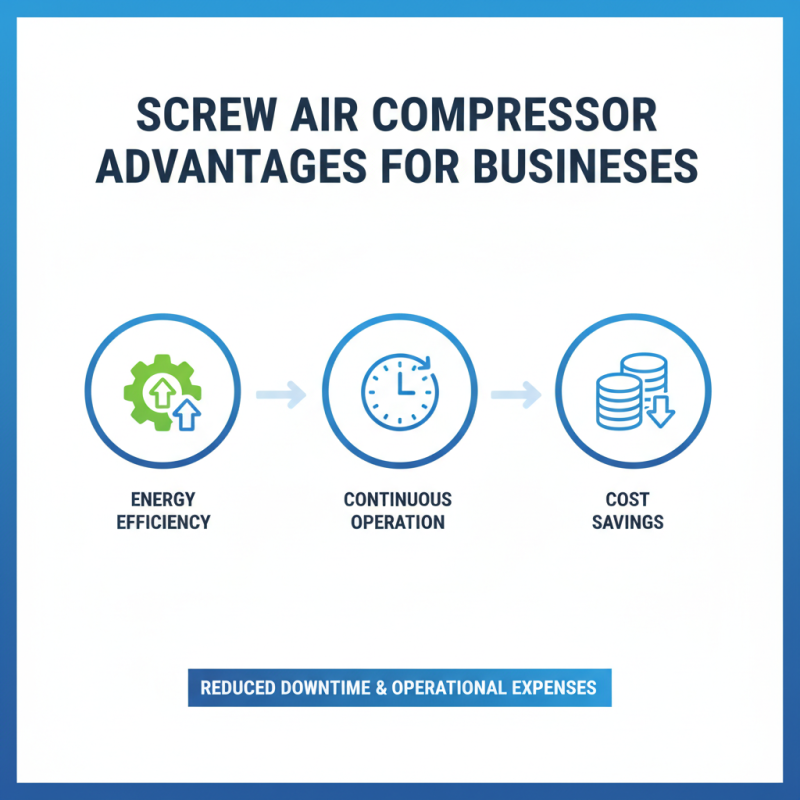
Screw air compressors are a popular choice for many businesses due to their unique features. One key advantage is their efficiency. They can operate continuously, which is essential for industries with high air demands. This constant performance helps reduce downtime. Over time, this efficiency can lead to significant cost savings.
Another advantage is the compact design. Screw air compressors save space. Their smaller footprint allows for easier installation in tight areas. This can be especially beneficial for businesses with limited real estate. Employees can work more safely and comfortably around them.
However, it’s vital to consider initial costs. While screw compressors generally offer long-term savings, upfront investment can be high. Proper maintenance is also crucial. Without it, performance may drop. Therefore, businesses must weigh their options carefully before making a decision. It’s not just about choosing a compressor; it’s about choosing the right one for specific needs.
Factors to Consider When Choosing a Screw Air Compressor
When choosing a screw air compressor, several factors come into play. Efficiency is paramount. According to a 2022 report by the International Energy Agency, compressed air accounts for about 10% of industrial energy consumption. This means that selecting a highly efficient model can lead to significant cost savings. A well-chosen screw air compressor can reduce energy use by 20-30%.
Reliability is another crucial aspect. Businesses rely on compressed air for various operations. Downtime can result in lost productivity and revenue. A 2021 study noted that the failure rates of conventional compressors can reach 30%. In contrast, screw compressors tend to have lower failure rates owing to their robust design. They can work continuously for extended periods without overheating, providing consistent performance.
Maintenance requirements also need attention. While screw air compressors may have higher initial costs, they often require less frequent maintenance compared to piston compressors. However, it is essential to remember that neglecting regular maintenance can lead to performance issues. Detailed inspection and timely service are necessary to keep the compressor running smoothly and to avoid costly repairs down the line.
Comparison of Air Compressor Types for Business Needs
Applications of Screw Air Compressors in Various Industries
Screw air compressors have carved out a significant niche across various industries. Their unique design allows for continuous operation, making them ideal for high-demand situations. Reports indicate that more than 50% of manufacturing facilities utilize these compressors due to their efficiency and reliability. This is evident in sectors like automotive, where precise air pressure is essential for the assembly line.
In the food and beverage industry, screw air compressors play a vital role. They help maintain hygiene during packaging and bottling processes. Research shows that compressed air accounts for up to 10% of the total energy consumption in this sector. Proper maintenance of these compressors can lead to energy savings of over 15%. However, monitoring is crucial, as neglect can result in contamination or inefficiency.
The construction industry also relies heavily on screw air compressors. These devices power pneumatic tools essential for various tasks. Up to 40% of the construction company's energy costs can be attributed to compressed air usage. Regular performance evaluation is necessary, as underperforming compressors can slow down work and inflate expenses. Adopting a screw air compressor is an investment, but the choice should be informed by ongoing operational needs.
Maintenance Tips for Optimal Performance of Screw Air Compressors
Screw air compressors are popular for many businesses due to their efficiency. However, optimal performance requires proper maintenance. According to industry reports, poorly maintained compressors can lose up to 10% of their efficiency. Regular upkeep may prevent this decline, ensuring your operations run smoothly.
Checking and replacing air filters regularly is essential. Dirty filters can reduce airflow and increase energy consumption. Cleaning or changing the filters every month improves efficiency. Additionally, inspect the compressor for any unusual noises or vibrations, as these could indicate potential issues. These early detections can save you costly repairs down the line.
Implementing a schedule for oil changes is also vital. Regular oil checks and changes not only enhance performance but can extend the compressor's lifespan. A study found that a well-maintained screw compressor can last up to 20 years. Neglecting these practices may lead to unexpected breakdowns and increased operational costs. Prioritizing maintenance keeps your system running efficiently.